Should the word "Tebowing" be added as an official word in the dictionary?

Tuesday, May 29, 2012

One Last Word

After four years of high school, I have learned about one thing in particular above anything else. Myself. Honestly looking back at my former 8th grade self, I knew nothing concerning my learning style. I had no idea what type of learner I was. Auditory? Visual? Tactile? I had no idea of what subjects I was interested in. Math? History? Science? As of 8th grade, I excelled in everything, yet had no preference. The most important thing high school has offered me is greater knowledge about myself. For the first time ever, I can confidently say what type of learner, what type of thinker, what type of student I am. High school, especially through the Academy, has put me in a diverse set of situations. This diversity has shined light on both my strengths and weaknesses.

I have learned much about my brainstorming/writing process. The majority of my brainstorming process is compromised of thinking. Before I start writing, I need to think through everything I'm going to say and all my ideas thoroughly before I begin writing. I've realized that it is difficult for me to simply begin writing right away.

I have also learned that I'm a more detailed thinker rather than a abstract/big idea thinker. I have a tendency to pick apart the minute observations, and I jump to these things first. I have more trouble noticing larger patterns.

Through my activities and courses, I have learned what subjects I dislike and like. I have learned what I would like to pursue in college and what I want to avoid. French and History are subjects I must avoid in college. Math is something I'm a bit more comfortable with but would still like to avoid. Science and English are two of the more preferable subjects I would be interested in studying in college. This is something I never would have known about myself entering high school.

As I look to college, I'm optimistic about learning much more about myself and the way I think. Each mind is unique, and it's interesting to observe how each mind thinks differently. 

Wednesday, February 29, 2012

"Justice" through a Pyschoanalytical Lens

I truly find it interesting how current philosophers discuss and explain their ideas. John Rawls, a James Bryant Conant University Professor of Philosophy at Harvard University from 1962-2002, did just that in his unique claims concerning justice. His most famous work is probably A Theory of Justice (and mainly what this blog will talk about) from 1971. I’ve done a little bit of reading on some of his work, and I find it confusing yet interesting as I’ve tried to digest it.

In the U.S., “justice” is a term thrown around without much thought given to its actual meaning. Schoolchildren across America say the Pledge of Allegiance concluding with the phrase “with liberty and justice for all.” Justice is a concept that has been argued about by philosophers since the beginning of history. It’s often closely tied with the idea of fairness and has been connected with the idea of rationality. For example, the Supreme Court today is expected to rationally debate long and hard about the fairest course of action. The opposite of a just society is a tyrannical one. Justice and personal virtue (morality) are related, but unique ideas. I guess justice would be the morality that we agree upon as a society and make into laws.

Rawls has two main ideas that work hand in hand with each other: the original position and the veil of ignorance. Basically the “original position” is when representatives of people with limited information about the interests that they represent try to agree as to how society should be ordered. Rawls calls it the place in which everybody decides principles of justice from behind a “veil of ignorance.” All this is a hypothetical “thought experiment” designed to reflect what principles of justice would be present in a society based on free and fair cooperation between citizens.

The “veil of ignorance” that Rawls references on numerous accounts in his works basically blinds people to all facts about themselves that might cloud what notion of justice is developed. This means from behind this veil, that person does not know the background or situation of his “client”. He negotiates blind. Rawls provides an example and says it’s method of determining the morality of a certain issue based upon the following principle: imagine that societal roles were completely redistributed (yes, high class to poverty, working class to billionaires, poor to working class) and from behind this “veil” you do not know what role you’ll be assigned. Decisions made from behind this veil would be more equal than decisions about society made from a starting point where we know our positions and our self interest.

Putting aside the complex “thought experiments” and the vocabulary, if you think about the theory, it makes sense, right? Many “just” things we do are performed based on ignorance. We individually pick lottery numbers to see what order we get to choose items, or what groups are formed. Any decision that is made visually and allows us to logically and rationally calculate automatically is influence by a notion of bias and favoritism.

So Rawls tries to achieve justice or a just society using this method, but does this realistically work? How does either justice or Rawls’ method take into account the basic flaws within human nature? Even if people are behind this “veil of ignorance”, I don’ think fairness can be attained because people will still make calculations about ANY principle based upon how THEY end up under it. Even if the method and “place” have changed, the person making the decision has not.

Furthermore, Rawls considers justice as THE most important thing in society calling it the “first virtue. Should justice be considered before all things? What about survival? Like discussed before, what constitutes justice is open to interpretation. This means that the term is vague. Is justice fairness? Fair according to whom? There will never be a unanimous answer as to what justice is, so can it be achieved. Should something unexplainable come before solid, visible facts? Let’s say there’s a violent student attending an elementary school and one day he brings a gun to school. The administration expels him from the school and denies education to him anywhere within the district. What is more important- the injustice of the student not being able to receive an education like every other child in America or the safety of the other children? When the federal government is implementing a government-run health care program, what’s more important- the advantage of helping economic recovery or being just by giving everyone access to health care? Justice is about equality. However, what if fair or equal distribution is impossible?

I am curious about how groups like the Supreme Court or others in the judicial field would respond to philosophies concerning justice. I’d like to think that justice can always be attained, and personally I try to be fair in all my actions, but is this a realistic way to carry out one’s life? What I see most important from this is the fact that this is something that require ALL of society to contemplate. It’s open to many different views, and justice itself should be formed by society as a whole. Philosophy is also important. It’s the main reason why I would even choose to willingly explore something like this I normally wouldn’t. It’s important in thinking about today’s world from a new angle.

Monday, February 6, 2012

Linguistics Regarding Genocide


So what exactly constitutes a "genocide"? In the international world, whether it's certain countries or even the United Nations, people are hesitant using the word "genocide". People label events of this magnitude various things: a "situation", a "conflict", and maybe eventually a "genocide." But why/when does it become okay to define an event as such?

Genocide was defined as a crime in international law by the 1948 Convention on the Prevention and Punishment of the Crime of Genocide. Article 2 defines it as the following:

"In the present Convention, genocide means any of the following acts committed with intent to destroy, in whole or in part, a national, ethnical, racial or religious group, as such:

(a) Killing members of the group,

(b) Causing serious bodily or mental harm to members of the group,

(c) Deliberately inflicting on the group conditions of life calculated to bring about its physical destruction in whole or in part,

(d) Imposing measures intended to prevent births within the group,

(e) Forcibly transferring children of the group to another group."


However, the Center on Law and Globalization points out that even under this definition, it is still unclear what counts as genocide. There are numerous important instances that this definition does not cover (i.e. mass political killings). Outside of a few cases (the Holocaust, the Armenian genocide and the Rwandan genocide) people disagree on just when and whether the term applies.

Scholars have compiled lists of the genocides during the 20th century. Even taking into consideration the difference in time periods, the lists are different. Scholars and politicians disagree about whether or not to use the word genocide to describe the deaths and destruction of the societies of indigenous peoples during the colonial periods. Even in the current context, scholars and policy makers cannot agree on whether the violence in Darfur counts as a genocide. While there is compelling evidence that attacks against the Darfurian people is both directed by the Sudanese government and has a racial basis, people from Darfurian tribes live in peace in areas of Sudan outside Darfur. So, is the current conflict in Darfur a genocide and how is it different than previous violent government actions in Sudan?

The current definition seems to ignore the targeting of political groups; instead it is limited to racial, ethnic, national and religious groups. This poses a problem when the number of people murdered because of political affiliation since World War II far out numbers those killed when racial, ethnic, national or religious groups are targeted, and sometimes mass killing of political groups can shade off into genocide so it is not always clear whether a situation is a genocide.

Friday, January 6, 2012

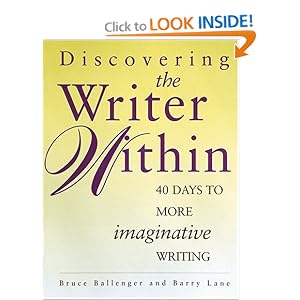
"Discovering the Wrtier Within"- A Book Review


My winter break was full of writing lots and lots and lots of college applications. It was a tiring process but a surprising one also. I have never learned as much about my writing process more than I did in the past two weeks. While writing, I it's often difficult to find certain words. The hardest thing about writing "good" essays for me is that essays aren't written in one attempt. They go through a serious revision process. In that revision process, I end up more confused than I was when I began. I can't find the perfect words to say what I mean in a concise manner. Basically, the biggest issue for me is I've got too much to write about and need to focus. And I knew this. For my entire writing life, focus is the area I struggle with most in writing essays. College applications tested me greatly because there were word limits. And I couldn't meet them in a first draft, never. So, how was I going to improve?

Over break, I read a book titled Discovering the Writer Within: 40 Days to More Imaginative Writing. This was a first for me. I had never read a "writing manual" before in my life. But the book gave me some interesting thoughts to chew on.

The book is a 40 day "workout program" of imagination-stretching exercises that helps writers open up, release creativity and spark ideas. And in regards to my issue, there were specific chapters that helped me tremendously.

In chapter 13, I learned an interesting tip to deal with "writer's block." Often, people say to "write about what you know." However, the book suggested the exact opposite- to write about what you don't know. Write about what you haven't figured out yet. This makes you curious. Write about what confuses you. You're able to seek out confusion, draw it close, and write your way to understanding. If you retell old stories that no longer raise questions for you, it's dull. And that surely doesn't help with "writer's block."

In chapters 18 and 19, I learned the importance of writing a quick draft- a super quick draft. It's unwise to draw out the process for more than one or two days. This surprised me because I spend an enormous amount of time on my first draft, and sometimes that first draft is closely identical to my final version because I've gone through a long, drawn-out process of slowing thinking about it as I wrote. However, it's better to force yourself to complete a draft quickly, even if that means leaving unsatisfactory holes or loose ends. The longer you toil over writing the first draft, the more likely you are to fall into its grip. Even with all its flaws, a fast draft has a spontaneity and freshness to it that's missing from a carefully constructed one. Because of this, it's easier to revise.

The book offered a unique method to help in this process. Print out a first draft, get a pair of scissors, and cut up the draft by paragraphs. This lets you attack your work physically. I found this method extremely helpful because I often get hung up on the sanctity of my typed page. But once it's disassembled, I'm able to forget how attached I was to the first draft. It was easier to focus on the most important parts of my essay.

Overall, Bruce Ballenger and Barry Lane did a fantastic job with this book. It helps you find the writer inside and gives you a place to begin. The book is best for people who aren't ready to call themselves writers yet. It's for people who are unsure of what they're doing/don't know how to get started. One of the many positives is the book is written in a extremely personal voice. You're able to notice the two authors' distinct voices but they complement each other nicely. Sometimes one or the other will even discuss his reactions to one of the other author's exercises.

I'm glad I came across this book while hunting for one in the library! Since the book is quite old, I don't think I would have naturally found this book if I hadn't been actively seeking one out on this certain topic.